
The Ultimate Dental SEO Guide

How to Get Found, Booked, and Trusted by Patients Online

In 2026, your patients’ first impression doesn’t happen in your waiting room — it happens on Google. When someone searches “dentist near me,” “Invisalign cost,” or “emergency dentist open now,” they’re not casually browsing. They’re ready to choose. Dental SEO is how you make sure your practice shows up first, looks like the best option, and turns that visibility into booked appointments — even as AI-powered search changes how patients discover businesses.

Table of Contents

1) Quick Start: The Fastest Way to Improve Dental SEO

If you only have 60 minutes today, do this:

  • Claim and fully complete your Google Business Profile (GBP)
  • Ensure your name, address, and phone (NAP) match everywhere
  • Add your top services to GBP (Invisalign, implants, emergency, etc.)
  • Add 10+ high-quality office/team photos
  • Ask 3–5 happy patients for Google reviews today and respond to every review
  • Test your site speed on mobile and fix any obvious issues

If you have 7 days, do this:

  • Create/upgrade your top 5 service pages (implants, Invisalign, emergency, veneers, whitening)
  • Add FAQs to each service page
  • Add LocalBusiness + Dentist schema
  • Add internal links between related services
  • Create a “Meet the Doctor” page that builds trust + expertise
  • Start weekly GBP posting

If you have 90 days, do this:

  • Build a full topic cluster strategy (services + cost + insurance + symptoms)
  • Build review automation (SMS/email system + in-office workflow)
  • Launch local authority link building (sponsorships + partnerships + PR)
  • Set up conversion tracking (calls, forms, bookings)
  • Optimize for AI search using AEO/GEO formatting and schema


2) What Is Dental SEO (and Why It Still Works)

Dental SEO (Search Engine Optimization) is the process of improving your online presence so your practice ranks higher in:

  • Google Search (organic listings)
  • Google Maps / Local Pack
  • AI-powered search answers and summaries

The goal isn’t just traffic — it’s new patients.

Your most valuable SEO wins come from high-intent searches like:

  • “dentist near me”
  • “emergency dentist open now”
  • “Invisalign in [city]”
  • “dental implants cost”
  • “pediatric dentist near me”

3) Dental SEO Ranking Factors: What Actually Moves the Needle

Ranking Area Impact What to Do
Google Business Profile Very High Categories, services, reviews, photos, posts, Q&A
Reviews Very High Volume + recency + responses
Service Pages High One page per service, strong on-page SEO + FAQs
Local Authority High Local links + citations
Technical SEO Medium Mobile speed + Core Web Vitals
Content Strategy Medium Cost/insurance/symptoms content
Brand Signals Medium Mentions, social activity, branded searches

4) Keyword Research + the Dental Keyword Map Template

Dental Keyword Types (with examples)

  • Core services: “dental implants [city]”, “Invisalign [city]”, “teeth whitening [city]”
  • Urgency: “emergency dentist [city]”, “same day crown [city]”, “toothache dentist near me”
  • <strongCost: “how much do dental implants cost”, “Invisalign cost [city]”, “veneers price”
  • Insurance: “Delta Dental dentist near me”, “dentist that accepts [insurance]”
  • Symptoms: “broken tooth fix”, “gum pain dentist”, “bleeding gums treatment”

The Dental Keyword Map Template

Keyword Cluster Target Page
Dental Implants + cost + financing /dental-implants/
Emergency Dentist + urgent care /emergency-dentist/
Invisalign + price + timeline /invisalign/
Teeth whitening + results + cost /teeth-whitening/
Dentist near me + location /dentist-[city]/

5) Website SEO: Service Page Blueprint (Copy/Paste Template)

If you want top-3 rankings, you need one page per major service.

Required dental service pages:

  • Dental implants
  • Invisalign / clear aligners
  • Emergency dentist
  • Cosmetic dentistry (veneers, bonding)
  • Teeth whitening
  • Crowns and bridges
  • Root canals (if applicable)
  • Pediatric dentistry (if applicable)

Service Page Blueprint

  1. H1: Service + City (Example: Dental Implants in Pensacola, FL)
  2. Above the fold: 1–2 sentence intro + CTA buttons + trust proof
  3. Who this is for: problems, patient situations, goals
  4. Benefits + outcomes: bullet list, include cost/time expectations
  5. The process: consult → treatment → aftercare
  6. Pricing & financing: provide ranges where possible
  7. Before & after: gallery or results section
  8. Why choose us: credibility, technology, comfort, sedation
  9. FAQs: 5–8 questions with clear answers
  10. CTA: book online, call now, insurance/financing link


6) Local SEO for Dentists: Google Business Profile Domination

For dental practices, the Map Pack is where most high-intent leads happen.
Winning local SEO requires a fully optimized Google Business Profile (GBP) and consistent reputation signals.

The Ultimate GBP Optimization Checklist

A) Categories + services (critical)

  • Choose the best primary category (Dentist, Cosmetic Dentist, Pediatric Dentist, etc.)
  • Add secondary categories strategically
  • Add every service with short descriptions

B) Photos and video (monthly)

  • Add 30+ high-quality photos minimum
  • Add new photos monthly (staff, office, equipment, team)
  • Add short videos (tour, doctor intro, testimonials)

C) Reviews (weekly)

  • Build review velocity (consistent new reviews)
  • Reply to every review (positive and negative)
  • Encourage natural service mentions (Invisalign, implants, emergency)

D) Posts (weekly)

  • Case story posts (before/after, treatment journey)
  • Service posts (same-day crowns, whitening, implants)
  • FAQ posts (“Does Invisalign hurt?”)
  • Team spotlight posts

E) Q&A strategy

  • Add your own Q&A questions and answers (insurance, emergencies, hours, sedation)
  • Answer community questions quickly

F) Spam defense (advanced)

  • Audit competitor listings for spam violations (keyword stuffing, fake locations)
  • Report spam listings with documented evidence
  • Improve your relevance signals while suppressing spam

7) Reviews & Reputation Engine (The #1 Local Growth Lever)

Reviews are not just conversion tools — they are local ranking signals.

The 3-Part Review Engine

  • In-office ask (front desk script)
  • SMS/email automation 1–2 hours post visit
  • QR codes at checkout + on thank-you cards

Front Desk Script

“We’re so glad you had a great experience today. Would you mind leaving us a quick Google review?
It really helps local patients find us.”

SMS Template

Hi [Name], thank you for visiting [Practice Name] today! If you have 30 seconds, could you leave us a quick Google review?
It helps other patients find care they can trust: [link]

Review Response Best Practices

  • Mention the service and the city naturally
  • Be human and warm
  • Never disclose protected health info (PHI)

8) Technical SEO + Core Web Vitals Checklist

Technical SEO is no longer just “speed.” It’s user experience.

The Dental Technical SEO Checklist

  • Mobile-first design
  • Core Web Vitals improvements (LCP, CLS, INP)
  • Fast, reliable hosting
  • Compressed images (especially hero banners)
  • Minimal plugin bloat
  • Clean URL structure
  • Proper indexation (avoid thin or duplicate pages)
  • Schema implementation (LocalBusiness, Dentist, FAQ, Review)


9) Content Strategy That Drives Patients (Not Just Traffic)

Your blog should support service pages by answering high-intent patient questions.

High-converting content types:

  • Cost content
  • Insurance content
  • Symptoms content
  • Comparison content (Invisalign vs braces)
  • What to expect + aftercare content

Examples:

  • How Much Do Dental Implants Cost in [City]?
  • Does Insurance Cover Invisalign?
  • Emergency Dentist: What Counts as an Emergency?
  • Do Veneers Ruin Your Teeth?

11) Tracking, Reporting & KPIs (How to Prove ROI)

What to track:

  • GBP insights: calls, clicks, direction requests
  • Website leads: form fills, online booking completions
  • Call tracking: separate GBP vs dental website vs ads
  • Rank tracking: map pack grid/heatmap tracking
  • Conversion rate by service page

12) AEO + GEO: How to Win in AI Search (Implementation Checklist)

AI search engines pull answers from content that is structured, clear, trusted, and FAQ-rich.

AEO Formatting Rules (Use on every service page)

  • Add a “Quick Answer” block under the intro
  • Use short paragraphs and bullet lists
  • Add FAQs with direct answers
  • Use schema (FAQ + LocalBusiness + Dentist + Review where appropriate)

GEO Strategy (AI Overviews)

  • Build entity signals: doctor bios, credentials, location relevance
  • Maintain consistent citations and mentions across the web
  • Support with rich media: photos, videos, testimonials
  • Update regularly: review velocity + GBP posting + page refreshes

13) Dental SEO Costs, Timelines & Hiring an SEO Partner

Typical SEO timeline:

  • 0–30 days: foundation (GBP, technical fixes, service pages)
  • 30–90 days: rankings begin moving, first measurable lead lift
  • 3–6 months: strong traction in mid markets
  • 6–12 months: consistent top results in competitive markets

General pricing guidance:

  • Small market: $750–$2,500/month
  • Competitive market: $2,500–$8,000+/month
  • Multi-location: $5,000–$15,000+/month


14) Dental SEO FAQs

How long does dental SEO take?

Most practices see measurable improvements in 3–6 months, with major competitive gains in 6–12 months.

What’s the #1 ranking factor for dentists?

For most practices: Google Business Profile + reviews + proximity + service relevance.

Should dentists create a page for every suburb?

Only if you truly serve those areas and can create unique, helpful content. Thin location pages can backfire.

Does blogging help dentists rank?

Yes — when it supports your service pages and targets high-intent topics like cost, insurance, and symptoms.

Is SEO better than Google Ads?

SEO builds long-term growth. Ads accelerate short-term lead flow. Most practices do best with both.
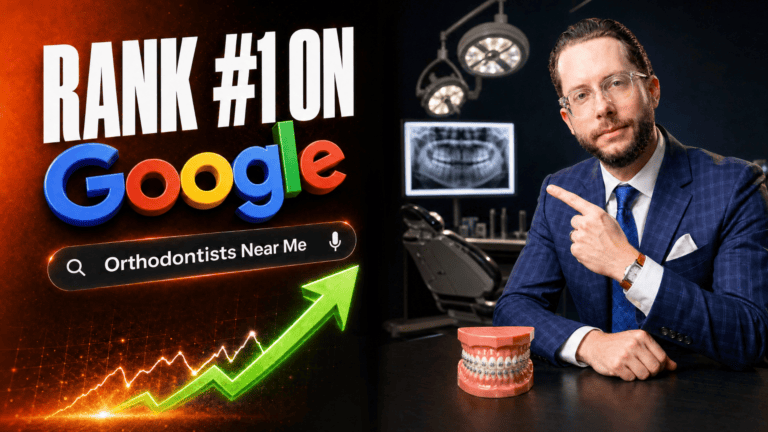
Want HIP to Build Your Dental SEO Strategy?

If you want predictable ranking growth, booked appointments, and better patients,
HIP can build a custom SEO plan based on your market, services, and competition.

Request a Dental SEO Audit

Important Recap

The Next Evolution: AEO and GEO

Search is changing fast, and AI is reshaping how patients discover dental practices.

AEO: Answer Engine Optimization

AEO (Answer Engine Optimization) focuses on optimizing your online content for AI-powered search assistants and chatbots like Google’s Gemini, ChatGPT, or Bing Copilot.
These AI engines pull answers directly from trusted online sources. When your dental website provides clear, structured, and expert-level content, it’s more likely to be featured as the AI-generated answer patients see first.

To optimize for AEO:

  • Write concise, direct answers to common patient questions such as “How much does Invisalign cost?” or “Does insurance cover dental implants?”

  • Use schema markup and structured data to help AI understand your content.

  • Build authority and backlinks from reputable health sources to boost credibility.

GEO: Generative Engine Optimization

GEO (Generative Engine Optimization) is the next frontier. Instead of just ranking on Google, you’re optimizing your content so that AI-powered search experiences like Google’s Search Generative Experience (SGE) pull your information directly into their generated answers.

GEO is about:

  • Creating high-quality, conversational content that aligns with natural language queries.

  • Focusing on E-E-A-T (Experience, Expertise, Authoritativeness, Trustworthiness).

  • Using multimedia content such as videos, FAQs, and testimonials to feed AI-rich search results.

In short:

SEO helps you rank on Google.
AEO helps you appear in AI-generated answers.
GEO ensures your practice stays visible as AI transforms search.

Why Dental SEO and AI Are Game-Changers in 2025

Patients aren’t just searching, they’re asking questions conversationally through AI tools. For example, “What’s the best dentist for kids near me?” or “Who offers same-day crowns in Pensacola?”

If your website is optimized for AI understanding, it can become the trusted voice AI uses to answer those queries, bringing your practice directly to the patient without them ever scrolling.

That’s the future of search, and it’s already here.

What’s Next

In the following sections, we’ll cover:

  • How to find the right keywords and conversational phrases for your practice.

  • How to optimize your Google Business Profile for local visibility.

  • How to build content that converts visitors into patients.

  • How to use AI analytics tools to track performance and refine your SEO strategy.

Why Is SEO Important For Dentists?

Dentist SEO is vital for several reasons.

According to one study, 90% of patients search online for a dentist to find a new dentist or to confirm a referral from friends, family, or the community. So if your practice isn’t easily visible, you’re missing out on potential patients.

And while paid ads can help you boost your visibility, this study showed that nearly 95% of all clicks went to organic search listings in 2022, not to paid ads. So if you’re not ranking in the SERPs, then you’re not really in the game of competing for new patients.

Finally, ranking higher in search results can boost the credibility of your dental practice in the eyes of potential patients. Seeing you listed first could even be the deciding factor between their choosing your practice or selecting another dentist.

How Much Does Dentist SEO Cost?

The cost of dental SEO can vary depending on the size of your dental practice and the services you need. Some dental practices opt to handle SEO in-house, while others prefer to work with a professional dental SEO agency.

If you don’t currently have a dental SEO strategy, you may want to hire an agency or strategist to help you create and implement a plan. You can figure it out independently, but it will take you much longer to get results than working with a pro.

Even with the right strategy, boosting traffic with SEO will often take 6 to 12 months of consistent work. So by the time you’ve found out your strategy isn’t working, you’ve already wasted valuable time.

Dental SEO can cost anywhere from a few hundred to several thousand dollars per month, depending on the services you need. Be sure to research a potential partner well, check their references, and ask for specific SEO results they’ve produced for other dentists.


How To Optimize Your Dental Website For SEO

To optimize your dental website for SEO, you’ll need to focus on several key areas:

SEO Keyword Research

Researching and identifying the keywords dental patients use in their web searches is essential to optimizing your dental website for SEO. This could be everything from “dentist” to “teeth whitening” to “pediatric dentist downtown Atlanta.”

If you’re using a search marketing agency, they will conduct dental SEO keyword research for you. But if you’re tackling it on your own, you’ll want to use a keyword research tool. There are many available, both free and paid, that can help you identify the most popular keywords related to dentistry.

Google’s Keyword Planner is designed to help you find the best keywords for paid advertising plans. But because this free tool shows you search volumes for terms and recommends similar keywords and phrases, you can also use it to identify high-volume or highly-targeted keywords related to dentistry to incorporate into your SEO strategy.

Another option is to use a paid competitive analysis tool, like SEMRush or Ahrefs, to find out which keywords and topics your competitors are targeting. These tools usually offer a free trial or low-cost trial period, which may be enough for you to find the SEO keywords that have the most potential for success.

By researching your audience and keywords, you ensure that your content is optimized for search engine rankings and will grab the attention of your target audience—great SEO keyword research results in more traffic to your website and more revenue for your dental practice.

PRO TIP: The key to winning at SEO in the short term is finding opportunities to rank for SEO keywords or SEO phrases that have high volume but low competition. Of course, you’ll want to rank for high-volume competitive keywords too, but that may take more time.

On-page Optimization

When it comes to optimizing your web pages, there are a few things you must optimize to ensure your pages rank for the keywords you want to rank for:

Title Tag

The title tag is the page title for SEO purposes. It tells search engines what your page is about. When you appear in a search, your title tag will usually be in the search result, and it also is displayed in the “tab” at the top of your browser:

Title Tag For SEO

Your title tag indicates to Google’s algorithm what your website does and who it is for. Therefore, you should include your most important keywords for the given page in your title tag.

Because the title tag displays in many search results, an optimized title tag will also help your site get more clicks when shown in SERPs by making it clear to searchers how you can help them.

Meta Description

The meta description is a short description of your page that is very important to Google’s search algorithm. It expands on the title tag to give more detail about the contents of your page. It’s often displayed as a “preview” of your site below the title tag in search results:

Meta Description For Dental SEO

The meta description should always include the focus keyword or keyword phrase for the given page. And it should also be written to give users a clear idea of what’s on the page to help generate more clicks on your listing.

Header Tags & Hierarchy

Your design team should assign header tag formatting to the main headline and all subheadlines on your dental web pages. The hierarchy of a webpage is essential for signaling to Google what is the most critical content on your page.

For this reason, you should again include your focus keyword phrase and variations of that phrase in headlines throughout your page.

The headers are organized by order of importance to create a hierarchy on your page— H1, H2, H3, H4, and so on. For example, each page should have only one H1 but can have multiple H2s nested below that H1, multiple H3s below each H2, and so on.

Technical Optimization

Technical SEO includes things like website speed, mobile-friendliness, and website structure. All of these play a role in user experience, as well as in SEO rankings.

Page Speed

Google regularly crawls your webpage to see how quickly your server loads the data to display all the words and images correctly. If your site is too slow, you’ll be penalized and never reach the top of the rankings.

Here are a few steps you can take to ensure page speed doesn’t sabotage your rankings:

  • Use a modern, lightweight theme or design by a developer who knows what they’re doing
  • Invest in quality hosting
  • Use image caching and compressed image and video files to ensure quick load times
  • Analyze your page speeds on both desktop AND mobile for issues

Use A Mobile-First Strategy

The buzzword here used to be “mobile-ready,” but mobile-ready is no longer enough—you must think mobile FIRST when designing or optimizing your site.

Why? Because a recent study showed that 65% of all searches come from mobile devices! If your site doesn’t display correctly on mobile phones, you lose over 50% of your potential patients! And that’s not all…

Google’s crawlers can see if your mobile experience is optimized or not. And they’ll penalize your SEO rankings if you’re not making things easy on mobile users. So you must ensure your mobile user experience is top-shelf if you want any chance of cracking Google’s top 3 search results in 2023 and beyond.

Schema Markup

While many of these tips are things you can teach yourself if you really want to, here’s one you should leave to the developers.

Schema markup (schema.org) is a structured data vocabulary that helps search engines understand your website’s information to serve rich results. For example, schema can be used to display images, tables, quotations, and lists in a way that web crawlers instantly recognize.

Using markup correctly will make it easy for Google to see your:

  • Medical specialty
  • Forms of payment accepted
  • Insurance accepted
  • Hours of operation
  • Slogan
  • Awards
  • Address
  • Phone number
  • Languages spoken

A list of standard markups is listed at Schema.org. In addition, there are online tools to evaluate your website and recommend ways to add structured data, like the Yoast plugin from WordPress.

Because it is a technical process, you should leave it up to a web developer to implement structured data.

Link Building

This is our secret sauce

For SEO purposes, it’s helpful to think of the internet as an interconnected network of websites. And the thing that connects all of those websites is links.

So the more links your website has, the more connected it is to the rest of the internet. Google uses the quantity and quality of links to your website to evaluate how authoritative and trustworthy your website is.

For this reason, one of the most important things you can do for your dental SEO is to build high-quality backlinks. Backlinks are links from other websites that point back to your website.

The more high-quality backlinks you have pointing back to your website, the more authoritative your website will appear to search engines, improving your SERP rankings.

To build high-quality backlinks, you can reach out to other websites in your niche and ask them to link back to your website. You can also create high-quality content that others will naturally want to link to, like blog articles, ebooks, and video content.


Why Local SEO Matters Most For Dentists

If you’re trying to start an e-commerce company or an online consultancy, you’ll want to rank everywhere in the top spots for your focus keywords. But as a dentist, your SEO focus is more narrow.

If you’re located in Dallas, it doesn’t do you any good to be listed in the top spot for someone searching for dentists in Chicago. You simply need to dominate the search results in your local market.

You’ll want to optimize your website for local keywords, like “best dentist Dallas” and “teeth whitening Dallas.” If you focus on specific neighborhoods, you may even want to create individual landing pages for each community or town you serve. That way, Google may display your results to searchers in those areas.

Also, you can submit your website to local online directories and try to get backlinks from other local businesses. Anything you can do to signal to Google that you’re important in your local area may make a difference.

But there’s one thing you must do above all else if you want to dominate local SEO—optimize your Google Business Profile.

Optimize Your Dentist Google Business Profile To Win At Local SEO

You know that little box that pops up with a company’s name, reviews, and photos when searching on Google or Google Maps? That’s called a Google Business Profile (GBP).

Hopefully, you’ve already claimed yours. But if not, you need to do so right now.

Your GBP might be the most powerful tool online for helping local patients find your practice. Here are some tips for optimizing your Google My Business profile. It is displayed in search results on both Google Search and Google Maps, and because it includes photos and other information, it draws a lot of attention to your business.

Here’s how to maximize your GBP to get more patients from local search:

Complete Your Profile

Make sure to fill out all the information on your profile, including your practice name, address, phone number, and website. Then, update your data regularly and be sure everything, including your opening hours, is accurate. Inaccurate information can frustrate potential patients and, if reported to Google, may negatively impact your search visibility.Add Great Pictures:

They say a picture is worth a thousand words, so add high-quality photos of your practice, including photos of your team, your office, and successful treatments, to your GBP. Focus on happy pictures of satisfied patients—people want to be able to imagine themselves getting the same results.

GMB SEO For Dentist

Encourage Reviews

Encourage your patients to leave reviews on your profile. Your star rating is highly visible on the GBP, and having many positive reviews can help improve your visibility and attract more patients. So remind your patients when in the office and encourage them via email or text message campaigns.

Bonus points: REPLY to all reviews (positive and negative). Your patients and potential patients will appreciate the effort, showing that you care what your patients have to say!

Post Updates Monthly

Did you know that Google allows you to post news, updates, and promotions to your Google Business Profile? And Google’s algorithms always love fresh content, so regular posting may help you beat out local competitors for one of the top spots.

You can make posts about

  • Announcement of new locations, doctors, or changes to your operating hours
  • Special offers or limited-time promotions
  • New product offerings or services

Add an eye-catching photo and a quick message. Only the first ~10 words will show before users click to see more, so give them a reason to read more. And include a call-to-action, like a link for them to click to schedule an appointment.

The Role Of Social Media In Dental SEO

While social media isn’t a direct ranking factor, according to Google, being active on social media helps you accomplish many goals that will boost your SEO rankings. So we consider social media an indirect but significant factor in SEO.

Posting regularly on social media can help you:

  • Spread content to boost on-site metrics like page views, time on page, and other critical ranking factors.
  • Build backlinks when your followers link to content or promotions they’ve seen you share through your social channels.
  • Create trust with your audience and encourage a higher rate of website conversions.
  • Generate traffic to your website to help you book more new patients.

Should You Use Professional Dental SEO Services?

As you’ve seen, there’s much to do to master SEO and raise your dental website to the top of the rankings. And most dentists have better things to do than spend time learning an entirely new skill set.

That’s why you should also consider using professional dental SEO services. An agency experienced in dental SEO services can help you optimize your website for search engines, build high-quality backlinks, and improve your technical SEO. They can also provide detailed reports on your website’s search engine performance, so you can see what’s working and what’s not.

While it’s possible to attempt to optimize your website on your own, working with a professional dental SEO company can provide several benefits, including:

Ongoing Monitoring and Improvement: SEO is a continuing process, not a one-time task. Continuously monitor your website’s performance and make improvements as needed to maintain and improve your search engine rankings.

Increased Expertise: SEO experts have the knowledge and experience necessary to optimize your website effectively.

Time Savings: Optimizing your website for SEO can be time-consuming, especially if you’re learning from scratch. Working with a professional SEO company can save you time and allow you to focus on running your dental practice.

Better Results: A professional SEO company has access to the latest tools and techniques, which can result in better, faster results for your website.

More Revenue: The ultimate goal of dental SEO is to increase the number of leads and revenue for your practice. Working with a professional dental SEO company will help you achieve your goals more effectively.

Get Started Optimizing Dental SEO for Your Practice

Congratulations, now you have all the info you need to start driving more new patients to your dental practice using Search Engine Optimization.

Hiring an SEO professional or agency makes the most sense if you want the fastest and most predictable results. The cost may vary, but a talented SEO team will pay for itself by bringing new patients through your door.

Your journey to the top of Google’s search results starts now—so get out there and dominate local SEO in your market. And experience the long-term growth impact of increased visibility and authority online!